
A Deep Dive Into Cavitation — And Why It’s Not Your Bones Cracking
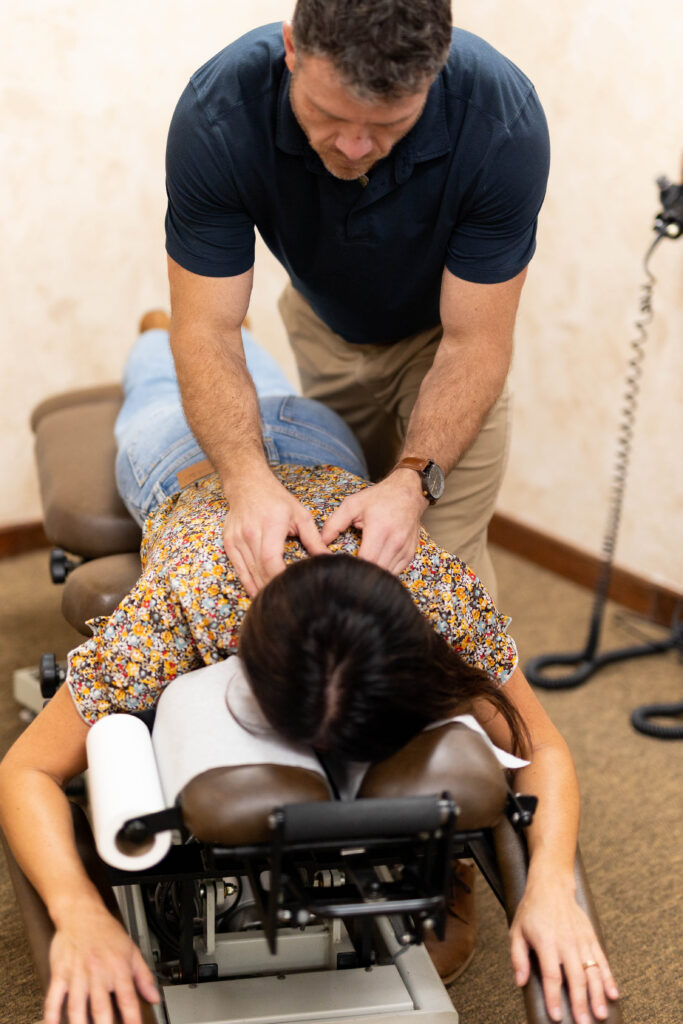
If you’ve ever had a chiropractic adjustment, stretched your neck, or cracked your knuckles, you’ve probably heard that familiar “pop” or “crack” sound. For some people, it feels satisfying. For others, it can sound a little concerning. One of the most common questions we hear is: “Was that my bones cracking?” The answer is simple: No — that popping sound is not your bones cracking. In most cases, the sound comes from a natural process called cavitation.
What Is Cavitation?
Your joints are surrounded by a fluid called synovial fluid. This fluid helps lubricate the joint, reduce friction, and allow smooth movement. Inside that fluid are dissolved gases, such as oxygen, nitrogen, and carbon dioxide. When a joint is gently moved or adjusted, pressure inside the joint can change quickly. That pressure change can cause tiny gas bubbles to form or release, creating the popping sound you hear. That process is called cavitation. Think of it a little like opening a carbonated drink. The sound is not the bottle breaking — it is gas being released because of a pressure change.
So, Are Bones Cracking?
No. During a normal chiropractic adjustment, the sound is not bones grinding, breaking, or cracking against each other. The “pop” is simply a release of gas within the joint space. That is why the sound can happen during an adjustment, during stretching, or even when you move a certain way on your own. It is a normal joint phenomenon.
Does a Louder Pop Mean a Better Adjustment?
Not necessarily. This is one of the biggest myths about chiropractic care. A loud pop does not automatically mean the adjustment was more effective, and a quiet adjustment does not mean nothing happened. The goal of an adjustment is not to “make noise.” The goal is to improve joint motion, reduce restriction, improve nervous system function, and help the body move the way it was designed to move. Some adjustments are loud. Some are quiet. Some produce no sound at all. What matters most is restoring proper motion and function.
Why Do Some Areas Pop More Than Others?
Some joints cavitate more easily than others. This can depend on several factors, including:
- Joint position
- Muscle tension
- How restricted the joint is
- Hydration
- How recently the joint has already popped
- Individual anatomy
You may also notice that once a joint pops, it usually will not pop again immediately. That is because the gases need time to re-dissolve back into the joint fluid before cavitation can happen again.
Is Cavitation Dangerous?
For most people, occasional joint popping from normal movement is not dangerous, especially when it is painless. However, popping is not always the full story. If joint sounds are accompanied by pain, swelling, weakness, numbness, instability, or reduced motion, that may be a sign that something else is going on and should be evaluated. That is one reason chiropractic care is not just about “cracking backs.” A proper exam helps determine how the joints, muscles, nerves, posture, and movement patterns are functioning together.
Why Do Adjustments Feel Good?
Many patients feel relief after an adjustment, but it is not simply because of the popping sound. An adjustment can help improve restricted joint motion, decrease muscle guarding, reduce stress on surrounding tissues, and improve the communication between the spine and nervous system. When the spine is moving better, the body often functions better.
Should I Try to Pop My Own Neck or Back?
It is common for people to twist, stretch, or pull on their neck or back to get a pop. While occasional movement may not be a problem, constantly forcing your own joints to pop is not the same as a specific chiropractic adjustment. Self-cracking usually moves the areas that are already moving easily. It may not address the restricted areas that actually need help. In some cases, repeated self-manipulation can irritate joints, increase muscle tightness, or create a cycle where you feel like you constantly “need” to pop something to get relief. A chiropractic adjustment is specific, controlled, and based on what your body needs.
The Bottom Line
That popping sound during an adjustment is usually gas being released from the joint, not bones cracking. Cavitation is normal, but the sound itself is not the goal of chiropractic care. The real goal is better movement, better function, and helping your body work the way it was designed to. At Denison Chiropractic, we focus on finding the cause of restricted motion and helping restore healthier function naturally. So the next time you hear that pop, you can relax. It’s not your bones cracking — it’s just gas.