
Plantar Fasciitis Treatment
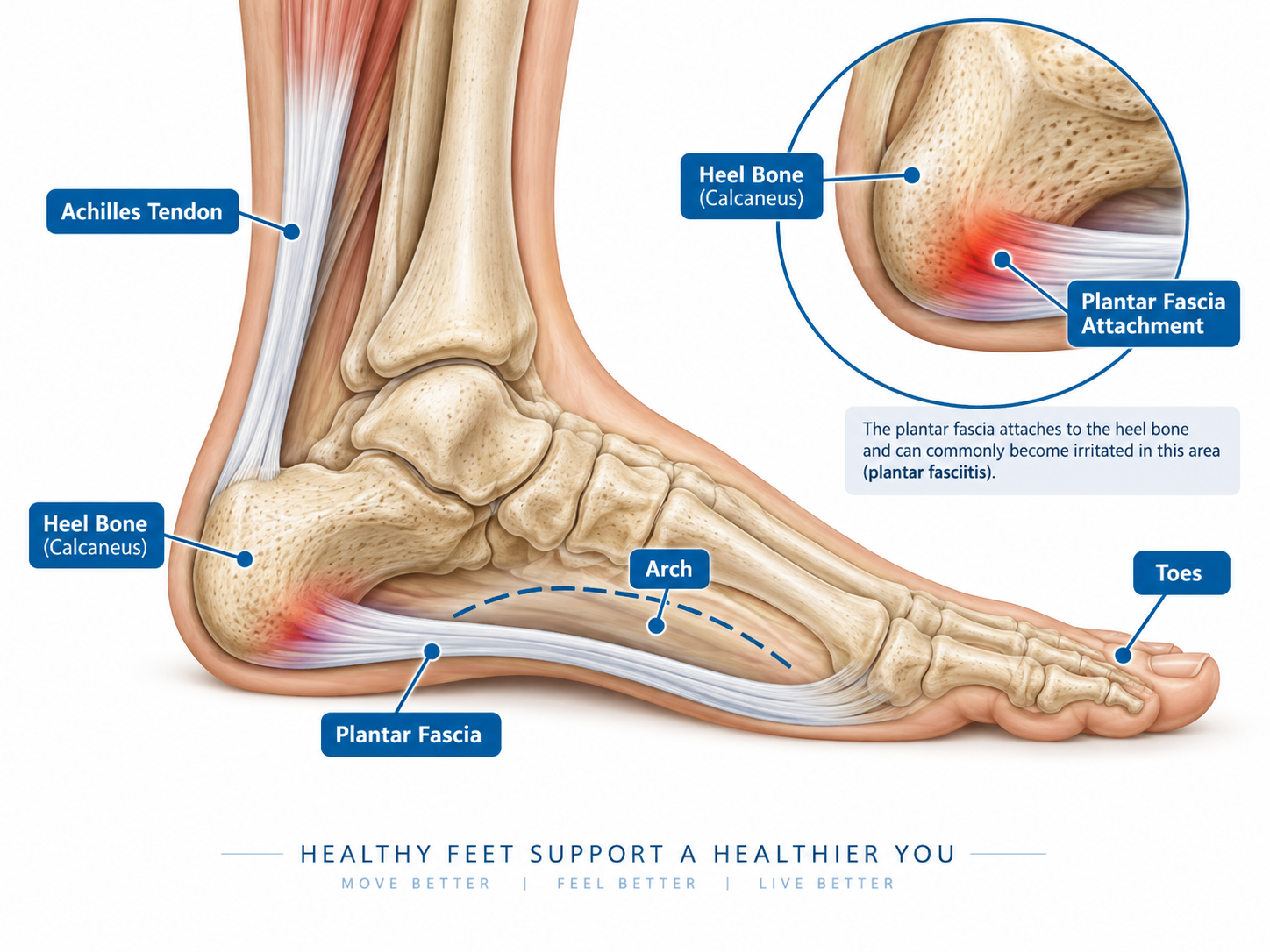
The plantar fascia is a thick band of tissue that runs along the bottom of the foot and helps support the arch.
Plantar fasciitis develops when this tissue becomes irritated or overloaded, often near its attachment at the heel.
Plantar fasciitis is one of the most common causes of heel pain. It often causes sharp pain with the first steps in the morning or after sitting for a long period.
What Causes Plantar Fasciitis?
Common contributing factors may include:
- Repetitive stress
- Increased walking or running
- Tight calf muscles
- Poor foot mechanics
- Changes in activity level
- Prolonged standing
- Unsupportive footwear
- Previous foot or ankle injuries
Because heel pain can have several different causes, identifying the source is important before deciding on treatment.
Common Symptoms
Plantar fasciitis may cause:
- Sharp heel pain
- Pain with the first steps in the morning
- Pain after sitting or resting
- Tenderness along the bottom of the foot
- Pain after prolonged standing or walking
- Tightness in the calf or arch
- Pain that worsens after activity
How We Evaluate Plantar Fasciitis
For new patients seeking care with our clinic, the evaluation process includes:
- A consultation about your symptoms and health history
- Orthopedic examination
- Foot and ankle movement assessment
- Evaluation of walking and lower-extremity mechanics
- On-site X-rays
We perform X-rays on new patients seeking care with our clinic so we can better evaluate joint and bone structure, identify findings that may affect care, and make more informed treatment recommendations.

How We May Help
Your treatment plan depends on your examination findings and may include:
Shockwave Therapy
Shockwave therapy may be considered for chronic plantar fasciitis and other soft-tissue problems. It delivers acoustic energy to the involved tissue and may be used to support the healing process.
Chiropractic Care
Chiropractic care may be used to address joint and movement problems in the foot, ankle, or lower extremity that may be contributing to abnormal stress.
Active Rehabilitation
Specific stretches and exercises may help improve calf flexibility, foot strength, mobility, and movement patterns.
Frequently Asked Questions
Can shockwave therapy help plantar fasciitis?
Shockwave therapy may be considered for chronic plantar fasciitis. Whether it is appropriate depends on the cause and severity of the problem.
How long does plantar fasciitis take to improve?
Recovery time varies depending on how long the problem has been present, activity level, foot mechanics, and how the tissue responds to treatment.
Do you take X-rays for heel pain?
We perform on-site X-rays on new patients seeking care with our clinic as part of our evaluation process. X-rays can help identify structural findings and rule out other causes of heel pain.
Plantar Fasciitis Care in Denison, Texas
If heel pain is making it difficult to walk, exercise, work, or stay active, we can evaluate what may be contributing to the problem and discuss your treatment options.
Contact Denison Chiropractic to schedule an evaluation.