
Herniated Disc Treatment
The discs between the bones of your spine act as cushions and help your spine move.
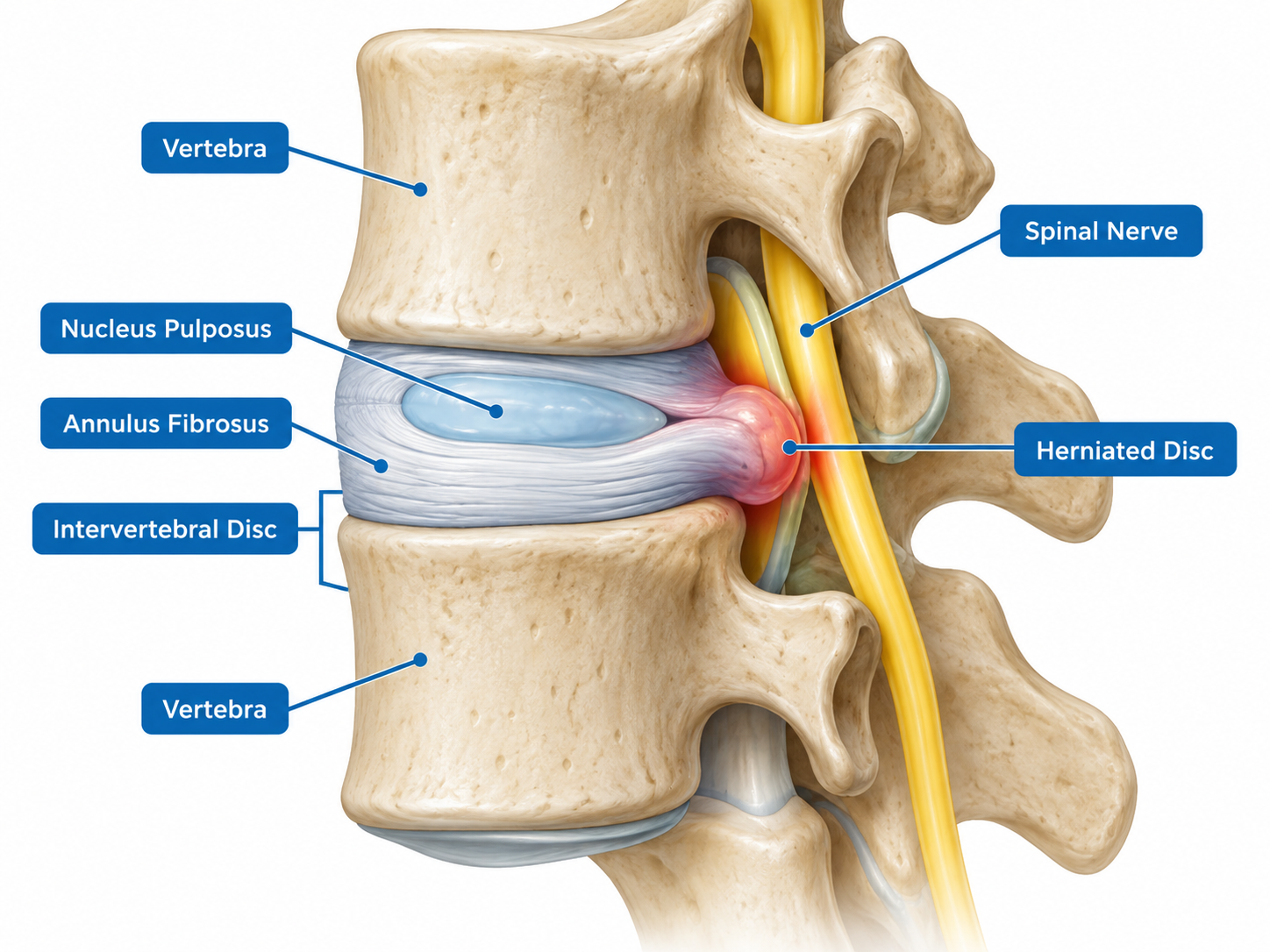
A herniated disc occurs when part of the softer inner disc material pushes through or irritates the outer portion of the disc. Symptoms are more likely when a nearby nerve becomes irritated or compressed.
A herniated disc can cause back or neck pain, but it can also irritate nearby nerves and lead to pain, numbness, tingling, or weakness in an arm or leg.
Common Symptoms
A herniated disc may cause:
- Back or neck pain
- Pain traveling into an arm or leg
- Numbness or tingling
- Burning or shooting pain
- Muscle weakness
- Pain with bending, lifting, coughing, or sneezing
- Sciatica when a lower-back nerve is involved
How We Evaluate Herniated Disc Symptoms
For new patients seeking care with our clinic, the evaluation process includes:
- A consultation about your symptoms and health history
- Orthopedic and neurological examination
- Movement and range-of-motion assessment
- Postural evaluation
- On-site X-rays
We perform X-rays on new patients seeking care with our clinic so we can better evaluate spinal structure, identify findings that may affect care, and make more informed treatment recommendations.
X-rays do not directly show a spinal disc like an MRI can, so additional imaging or medical evaluation may sometimes be recommended.
How We May Help
Treatment depends on your symptoms and examination findings.
Disc Decompression
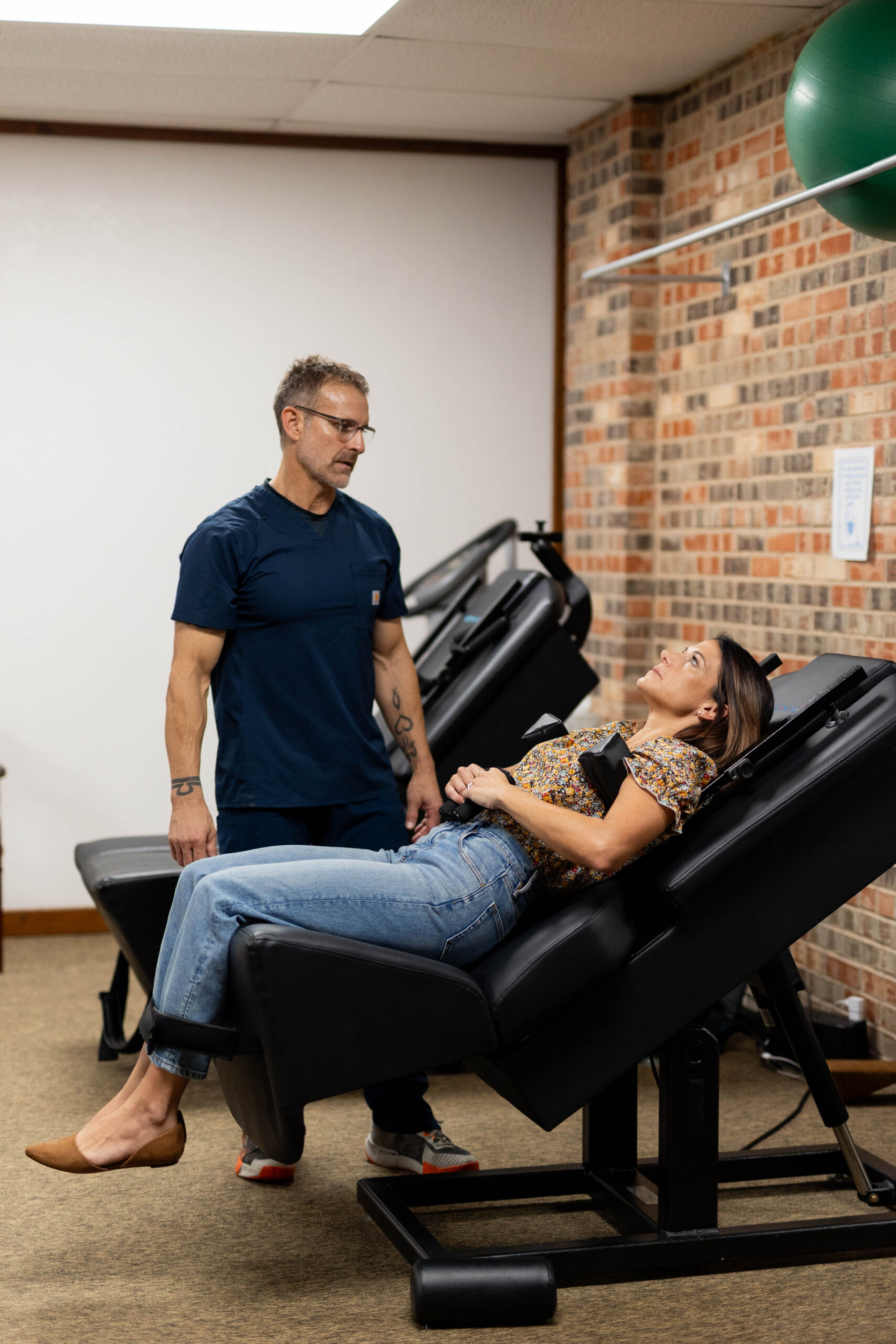
Spinal decompression may be considered for certain patients with disc-related symptoms. It uses controlled traction to gently unload portions of the spine and may help reduce stress on irritated spinal structures.
Chiropractic Care
Chiropractic adjustments may be used when appropriate to improve movement in restricted spinal joints and address mechanical problems around the affected area.
Active Rehabilitation
Specific exercises may help improve strength, stability, mobility, and movement patterns that place stress on the spine.
Other treatments such as electrical muscle stimulation or intersegmental traction may also be used when appropriate.
Frequently Asked Questions
Can a chiropractor help with a herniated disc?
Some patients with disc-related problems may benefit from conservative chiropractic care. The right approach depends on the individual examination and neurological findings.
Can spinal decompression help?
Spinal decompression may be appropriate for certain patients with disc-related symptoms. Your examination helps determine whether it is a reasonable option.
Does a herniated disc always require surgery?
No. Many disc-related problems are initially managed conservatively, although some cases may require medical or surgical evaluation.
Herniated Disc Care in Denison, Texas
If you have been diagnosed with a herniated disc or are experiencing pain, numbness, tingling, or weakness, we can evaluate what may be contributing to your symptoms and discuss your treatment options.
Contact Denison Chiropractic to schedule an evaluation.