
Spring and early summer bring a lot of joy for gardeners—fresh soil, blooming plants, and the satisfaction of watching something grow. But they also bring something chiropractors see every year: “Gardeners’ Back.”
After a long winter of less activity, many people jump straight into digging, lifting, planting, and weeding for hours at a time. The result? Lower back pain, stiff hips, sore shoulders, and sometimes even a slipped disc.
The good news is that most gardening injuries are completely preventable with a few simple habits. Here are some practical tips to help you enjoy your garden while protecting your spine.
1. Warm Up Before You Start 🌞
Most people wouldn’t run a mile without warming up—but they’ll go straight from the couch to shoveling mulch.
Before heading into the garden, take 3–5 minutes to loosen up your body:
- Gentle torso twists
- Hip circles
- Light squats
- Reaching overhead and side-to-side stretches
This increases blood flow and prepares your muscles and joints for movement.
Think of it as “warming up your soil before planting.”
2. Lift With Your Legs, Not Your Back 🪴
Bags of mulch, pots, soil, and stones are some of the biggest causes of gardening injuries.
When lifting:
- Stand close to the object
- Bend your knees, not your waist
- Keep the object close to your body
- Tighten your core
- Lift with your legs
Avoid twisting while carrying. Instead, turn with your feet.
Small change. Big difference.
3. Use a Kneeling Pad or Garden Stool 🌼
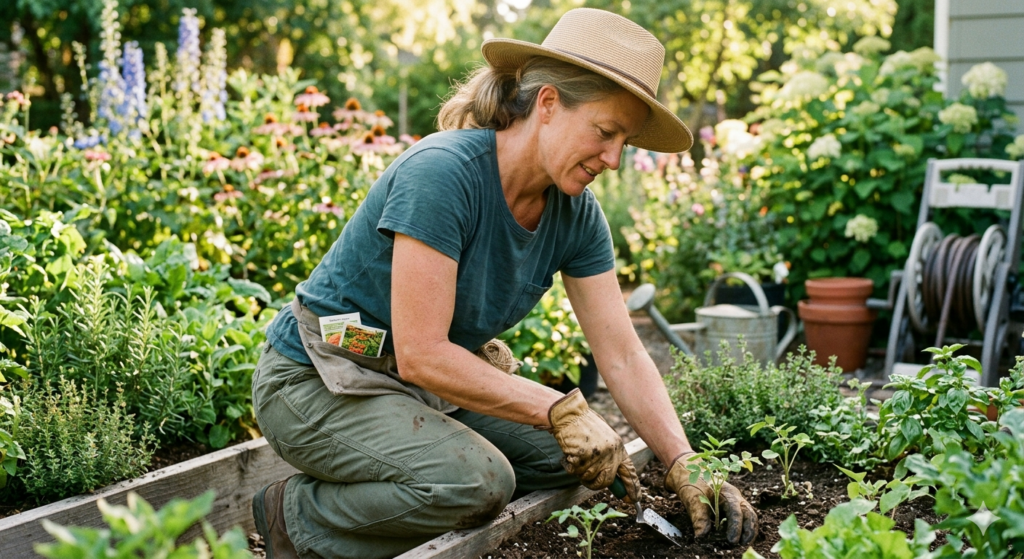
Weeding is one of the biggest culprits for back pain because it involves long periods of bending forward.
Instead of bending at the waist:
- Use a kneeling pad
- Try a garden stool
- Alternate between kneeling and squatting
This keeps your spine in a safer position and reduces strain on your lower back.
4. Break Up the Work ⏱️
One of the most common mistakes gardeners make is trying to do everything in one afternoon.
Your body prefers short bursts of activity with breaks.
A simple rule:
Work for 20–30 minutes, then take a 5-minute break.
Use the break to:
- Walk around
- Stretch your back
- Hydrate
Your garden will still be there tomorrow.
5. Keep Tools Close to You 🔧
Reaching too far forward puts a surprising amount of pressure on your spine.
Instead:
- Keep tools within arm’s reach
- Pull weeds close to your body
- Move your feet instead of stretching
If you’re constantly reaching, your back is doing more work than it should.
6. Switch Tasks Often 🌿
Doing the same movement repeatedly can fatigue muscles and lead to injury.
Rotate tasks such as:
- Weeding
- Planting
- Raking
- Watering
Changing movements helps distribute the workload across different muscle groups.
7. Know the Warning Signs 🚨
Your body usually gives signals before a real injury happens.
Watch for:
- Tightness in the lower back
- Sharp pain when bending
- Pain traveling into the hip or leg
- Stiffness the morning after gardening
If you notice these signs, stop and let your body recover.
How Chiropractic Care Helps Gardeners 🌱
Many gardening injuries come from restricted spinal joints and tight muscles that make the body move inefficiently.
Chiropractic care helps by:
- Restoring proper joint motion
- Improving posture and mechanics
- Reducing muscle tension
- Helping your body move the way it was designed to
When your spine moves well, everyday activities—like gardening—become safer and more enjoyable.
Final Thoughts
Gardening should be relaxing and rewarding—not something that leaves you icing your back for the next three days.
A few simple habits—warming up, lifting correctly, taking breaks, and protecting your posture—can keep you gardening comfortably all season long.
Your garden deserves care.
So does your spine.
If gardening has already taken a toll on your back, we’re here to help.
At Denison Chiropractic, our goal is simple:
Restore movement, reduce pain, and help you get back to doing the things you love.
Because a healthy spine means a healthier life.
🌿 Restoring Life and Joy Naturally