
We spend about one-third of our lives asleep, yet most of us give very little thought to how we’re lying down. Whether you’re a lifelong stomach sleeper or a dedicated side-curler, your position dictates how your body recovers overnight.
Here is the breakdown of the best (and worst) sleeping positions and how to pair them with the perfect pillow.
1. The Back Sleeper (The Gold Standard)
Sleeping on your back is generally considered the healthiest position. It allows your head, neck, and spine to maintain a neutral position, reducing pressure points.
- Best for: Preventing neck and back pain; reducing facial wrinkles (since your face isn’t pressed into a pillow).
- The Downside: It’s the worst position for snoring and sleep apnea, as gravity causes the tongue to collapse backward.
- The Pillow Strategy: Use a medium-loft pillow that supports the natural curve of your neck without tilting your head too far forward.
- Pro Tip: Place a small pillow under your knees to maintain the natural curve of your lower back.
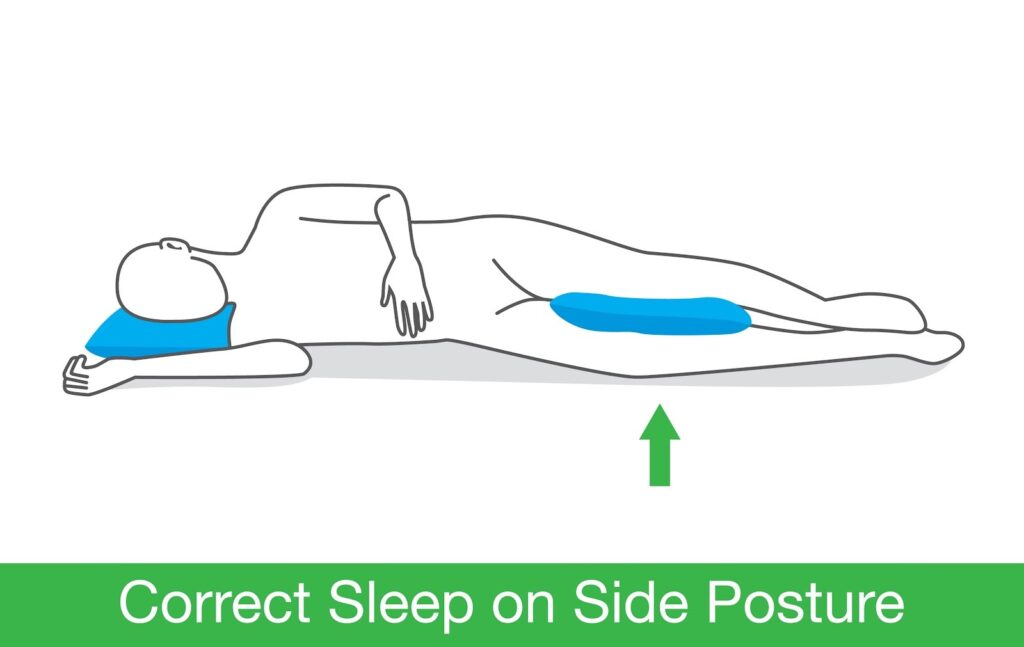
2. The Side Sleeper (The Fan Favorite)
This is the most common sleeping position. It’s excellent for digestion and is the recommended position for pregnant women and those with acid reflux.
- Best for: Reducing snoring and improving heart circulation (especially when sleeping on the left side).
- The Downside: It can cause shoulder pain or “pins and needles” in the arm if you stay in one spot too long.
- The Pillow Strategy: You need a firm, high-loft pillow to bridge the gap between your ear and your outer shoulder.
- Pro Tip: Place a pillow between your knees to keep your hips square and prevent lower back strain.
3. The Stomach Sleeper (The Red Zone)
While it’s great for stopping snores, stomach sleeping is generally discouraged by experts. To breathe, you have to turn your head to one side for hours, which puts massive strain on your neck and compresses your spine.
- Best for: Heavy snorers who don’t have back pain.
- The Downside: High risk of neck stiffness, lower back pain, and morning headaches.
- The Pillow Strategy: Use a very thin pillow or no pillow at all to keep your neck as flat as possible.
- Pro Tip: Place a flat pillow under your pelvis to lift your hips and take the pressure off your lower back.
Selecting the right pillow for you:
| Material | Best For… |
| Memory Foam | Contouring and pressure relief for neck pain. |
| Latex | Breathability and a “bouncier” feel (great for side sleepers). |
| Down/Feather | Softness and adjustability (best for stomach sleepers). |
| Buckwheat | Firm, cool support that stays in place all night. |
The Perfect Mattress
Knowing when to swap your mattress is tricky because the decline is usually gradual. Most people wait until they are in significant pain, but your body usually sends “whispers” long before it starts shouting.
Here are the four key ways to tell if your mattress has reached the end of its life.
1. The “Body Check” (How You Feel)
Your body is the most accurate diagnostic tool. If you feel better at 10:00 PM than you do at 7:00 AM, the mattress is likely the culprit.
- The 15-Minute Rule: If you wake up with lower back stiffness or neck pain that disappears after 15–30 minutes of moving around, your mattress is no longer supporting your spinal alignment.
- The “Hotel Test”: Do you find yourself sleeping significantly better in hotels or even on your own couch? This is a clear sign that your primary sleep surface is failing.
- Restless Legs: If you’re tossing and turning constantly to “find the spot,” it’s because the mattress has developed pressure points that are cutting off circulation.
2. The Physical Inspection
Take the sheets off and look at the bare mattress under good lighting.
- The Sag Test: Look for “dips” where you usually sleep. A sag of even 1–2 inches is enough to throw your spine out of neutral alignment.
- The Rolling Effect: If you or your partner feel like you are “rolling into the middle” of the bed, the internal support structure (coils or foam core) has collapsed.
- Noise: For innerspring mattresses, any squeaking or groaning when you move indicates that the metal coils are fatigued and no longer providing uniform tension.
3. The “Invisible” Signs
Sometimes a mattress looks fine but is failing in ways you can’t see.
- New Allergies: Mattresses are magnets for dust mites and dead skin. If you wake up with a stuffy nose, itchy eyes, or skin irritation that subsides once you leave the bedroom, the mattress may be a “hygiene hazard.”
- Heat Trapping: As foam materials break down, they lose their “breathability” and begin to trap body heat more aggressively. If you’ve suddenly become a “hot sleeper,” the foam might be deteriorating.
4. The Lifespan Rule of Thumb
While quality varies, every mattress type has an “expiration” window:
- Innerspring: 5–7 years (coils lose tension relatively quickly).
- Memory Foam/Hybrid: 7–10 years (foam begins to “soften” and lose its memory).
- Latex: 10–15 years (the most durable material).
The “Marble Test”
If you aren’t sure if your bed is sagging, try this: Place a marble or a small ball on different areas of the mattress. If it consistently rolls toward a specific “crater” in the center or where you sleep, your mattress has lost its structural integrity.
Your 10-Minute Pre-Sleep Routine and Hacks for Better Sleep
This routine is designed to lower your cortisol and core body temperature, preparing you for deep sleep.
- The “Brain Dump” (2 mins): Grab a notebook and write down everything you need to do tomorrow. This offloads “mental loops” that cause middle-of-the-night anxiety.
- The Dim-Down (1 min): Turn off overhead lights and switch to warm lamps. Dim lighting triggers the natural release of melatonin.
- The Spine Reset (5 mins): Perform a gentle “Child’s Pose” or “Cat-Cow” stretch. This decompresses the vertebrae after a day of sitting or standing.
- The Breath Protocol (2 mins): Try the 4-7-8 technique. Inhale for 4 seconds, hold for 7, and exhale slowly through your mouth for 8. It’s a natural tranquilizer for the nervous system.
Environment and habits matter just as much as your pillow and mattress. Here’s a checklist to help you set yourself up for restful sleep:
- Temperature Check: Is the room between 15–19°C (60–67°F)? A cool room is vital for deep sleep cycles.
- Blackout Mode: Are all blue light sources (LEDs, chargers, standby lights) covered or turned off? When the sun goes down, your body’s natural clock can sense it. Keeping bright lights on all evening tricks your body into thinking it’s still time to be awake. When the sun sets, go ahead and dim the lights inside your house.
- The “Phone Jail”: Is your phone plugged in across the room or in another room entirely?
- Caffeine Cutoff: Did you stop caffeine intake at least 8–10 hours before your planned bedtime? Yes, we said 8-10 hours. If your goal is to be asleep by 9 PM, the last coffee or energy drink needs to be empty by 1 PM. Don’t wait for the after-lunch slump to hit. If you’re feeling like you might need a jolt, have it at lunch!
- Hydration Balance: Have you stopped heavy fluid intake to avoid midnight bathroom trips? While you want to make sure you’re getting enough water throughout the day, it’s important to allow your body time to flush excess fluid out before you go to sleep.
- The 3-Hour Rule: Did you finish your last heavy meal at least 3 hours ago to prevent acid reflux?
- Fresh Air: If it’s safe and quiet, did you crack a window for 10 minutes to improve oxygen levels in the room? If you don’t want to crack a window, maybe consider an air purifier.
Quick Tip: If you can’t fall asleep within 20 minutes, get out of bed. Go to a different room, do a boring task in low light, and return only when you feel sleepy. This prevents your brain from associating the bed with wakeful frustration.